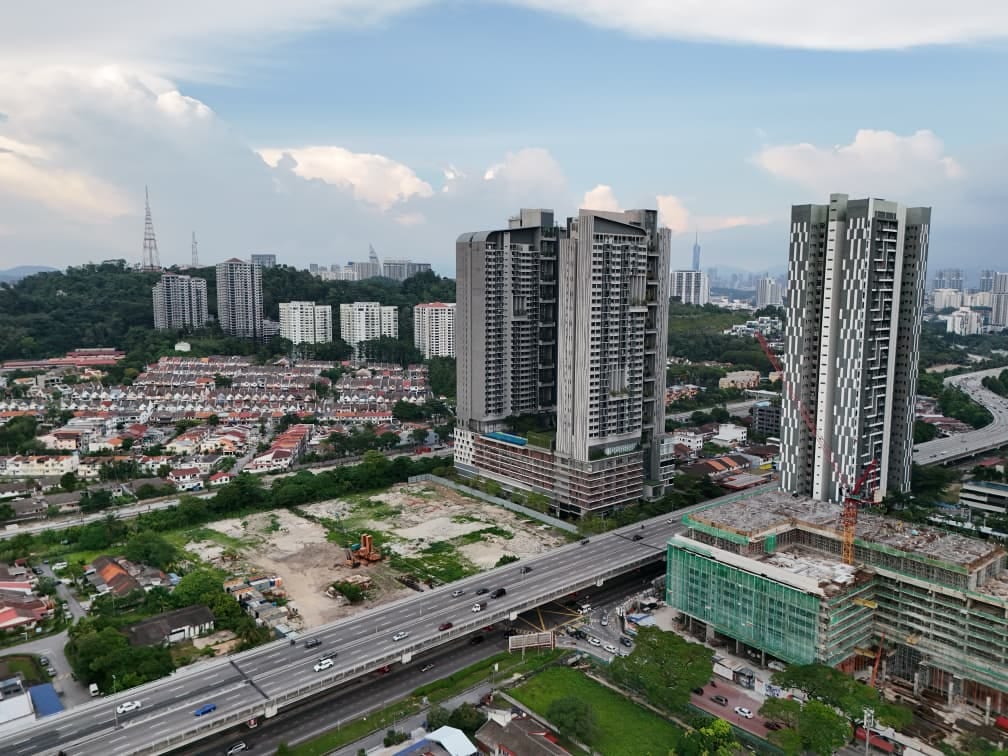
Buyers on Old Klang Road spend hours comparing layouts, finishes and facilities — and then barely glance at the one field on the title that outlives every renovation: tenure. Freehold versus leasehold is not a technicality. It shapes how much a bank will lend you, what your unit is worth in twenty years, and how easily you can sell. On a corridor where leasehold dominates the older stock, understanding tenure is one of the highest-value things a buyer can do before signing.
The 30-second read
- Financing is cleanest on freehold or long-lease titles; margins tighten as a lease runs down.
- A 99-year lease tends to track freehold for ~20–30 years, then decay accelerates.
- Short remaining leases trigger lower bank valuations and a shrinking buyer pool.
- Freehold launches on OKR are scarce by history — which is why M Aurora's freehold title stands out.
What the two titles actually mean
A freehold title gives you ownership of the land in perpetuity, with no expiry. A leasehold title — typically 99 years in Malaysia, sometimes 60 — is effectively a very long rental from the state; when it expires, the land reverts unless the lease is renewed (a process that costs money and is not guaranteed). Both can be perfectly good buys. The difference is what happens as the clock runs, and how the banking system treats that clock.
Financing: tenure sets your margin
This is where tenure hits your wallet first. For freehold and long-remaining-lease properties, banks generally lend on standard terms. As the remaining lease shortens, the calculus changes: financing is typically most comfortable at 75 years or more remaining; between roughly 50 and 74 years the margin of financing can be trimmed; and below about 50 years loans become difficult and the buyer pool narrows sharply (iProperty; Malaysia Housing Loan). For a buy-to-let investor, a reduced margin means more cash locked into the deal — which directly lowers your cash-on-cash return.
The 99-year decay curve
Here is the part that catches owners by surprise. A 99-year leasehold often appreciates at a similar pace to comparable freehold for the first 20 to 30 years. Beyond that, values tend to stagnate and then depreciate as the remaining lease shortens and financing friction builds (Malaysia Housing Loan). The effect compounds at resale: industry commentary describes cases where a leasehold condo with ~45 years left might carry a market asking price well above the bank's valuation — forcing the next buyer to top up a large cash gap, which suppresses the achievable price regardless of how rentable the unit is (iProperty).
| Stage of a 99-yr lease | Financing | Value behaviour |
|---|---|---|
| ~75–99 yrs remaining | Standard terms, similar to freehold | Tracks freehold closely |
| ~50–74 yrs remaining | Margin may be reduced | Growth slows vs freehold |
| Below ~50 yrs remaining | Difficult; cash-heavy buyers only | Stagnates, then depreciates |
Indicative thresholds from lender practice as summarised by iProperty and Malaysia Housing Loan. Individual banks differ; treat as guidance, not guarantees.
Resale: the buyer pool problem
A property is only worth what the next buyer can finance. As a lease shortens, fewer buyers qualify for a loan, more must pay cash, and the gap between asking price and bank valuation widens. That is the quiet tax of leasehold at exit — and it is why a freehold unit with the same location and condition can resell more smoothly years down the line. For a long-hold investor, this exit liquidity is arguably more important than a slightly lower entry price.
Why freehold is scarce on Old Klang Road
Old Klang Road is one of KL's oldest arterial corridors, and much of its land was alienated decades ago on leasehold or restricted titles. That history is precisely why genuine freehold development land here is limited — and why freehold launches command attention. M Aurora by Mah Sing is one such case: a freehold serviced residence on the corridor, indicatively from RM339,000, with completion (VP) targeted for September 2030. On a corridor where the standing stock skews leasehold — established condos such as Pearl Suria are leasehold, for example — a freehold title is a structural, not cosmetic, differentiator.
So which should you buy?
Leasehold is not "bad" — a well-located leasehold unit with a long remaining lease can be an excellent income buy, often at a lower entry price. But if you are holding for the long term, or you care about clean financing and a frictionless resale, freehold removes a category of risk you cannot fix later. The honest rule: if you choose leasehold, demand a genuine discount for it and check the remaining years; if a freehold option exists at a fair PSF, the certainty is usually worth paying for.
Not sure how tenure affects your loan?
Tell me the unit you're considering and I'll walk you through the financing, the remaining lease (if any) and the resale picture — a written, no-obligation read on the tenure risk before you commit.
💬 Get your free tenure checkThis article is general information by Kevin Lee (REN 14973, FLP Realty Sdn Bhd) and not financial or legal advice. Loan margins, lease thresholds and valuation behaviour are indicative of common lender practice and vary by bank and borrower; based on publicly available market data and the author's analysis as at June 2026, and not guarantees. Verify all figures and titles independently before making any decision. E&OE.